
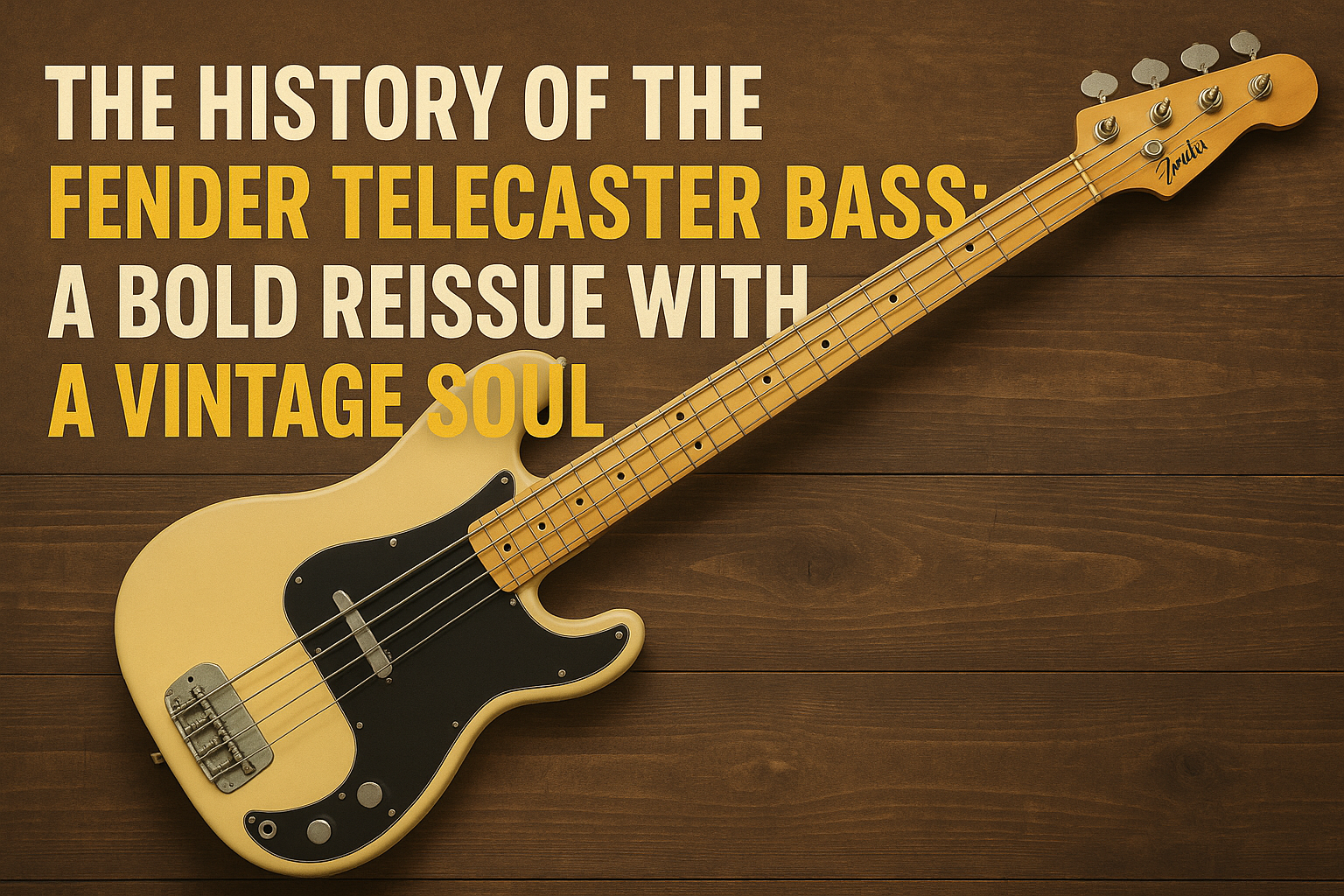
When Fender introduced the Telecaster Bass in 1968, it wasn’t just unveiling a new instrument — it was reviving a relic from its own early history. With its squared-off headstock and slab body, the Telecaster Bass paid homage to the original 1951 Precision Bass, bridging the gap between Fender’s roots and its modern electric ambitions.
The Original Blueprint: 1951 Precision Bass
To understand the Telecaster Bass, we need to go back to the source. In 1951, Leo Fender revolutionised the music world by launching the Precision Bass — the world’s first commercially successful electric bass guitar. It featured a slab ash body, a single-coil pickup, and a Telecaster-style headstock. Though groundbreaking, the early P-Bass design was quickly revised in 1957 with a contoured body and split-coil pickup — essentially becoming the Precision Bass we know today.
For years, that original design faded into the shadows — until Fender decided to resurrect it in the late ‘60s.
The 1968 Telecaster Bass: A Nod to the Past
In 1968, Fender introduced the Telecaster Bass as a reissue of the original ’51 Precision Bass — but it wasn’t marketed as a “reissue” at the time. The company had recently been acquired by CBS, and the new management was keen to expand the product line. The Telecaster Bass was a clever way to use existing designs and appeal to players who wanted a more old-school aesthetic.
Key features of the 1968 version:
-
Slab body with no contours
-
Large pickguard covering most of the body
-
Maple neck with a Telecaster-style headstock
-
Single-coil pickup in the neck position
-
String-through-body bridge
This version offered players a big, punchy tone with a percussive attack, ideal for early funk, rock, and country players.
1971 Redesign: Humbucker Power
In 1971, Fender updated the Telecaster Bass with a dramatic shift: out went the single-coil pickup, and in came a massive Seth Lover-designed humbucker — the same one used in the Telecaster Deluxe guitar. This pickup gave the Tele Bass a deep, thudding tone that appealed to players in heavier genres.
Other updates included:
-
Slightly re-contoured body
-
New 3-bolt neck plate (with Micro-Tilt adjustment)
-
Bullet-style truss rod
-
Glossy headstock logo
This version of the Telecaster Bass had a short but memorable run, and its huge low-end output made it a favourite for aggressive rhythm sections and dub reggae alike.
Discontinuation in 1979
By the end of the ’70s, Fender was streamlining its lineup. The Telecaster Bass — considered somewhat niche by then — was phased out in 1979, replaced by more modern designs like the Jazz Bass and active models that were becoming popular.
But the story didn’t end there.
Resurrections and Reissues: The Tele Bass Lives On
Over the decades, Fender and its subsidiaries have brought back the Telecaster Bass in various forms:
-
Fender Japan: Produced faithful ’51-style Telecaster Basses in the ’80s and ’90s, prized for their craftsmanship.
-
Squier Vintage Modified Telecaster Bass: A more affordable take on the humbucker-era model.
-
Fender Custom Shop: Occasionally releases stunning one-off versions for collectors.
-
Modern Player Series (2011): Fender launched a new take on the Tele Bass with dual humbuckers and a modern neck — blending tradition with innovation.
Today, both vintage originals and well-done reissues are highly sought after by bassists, collectors, and vintage gear enthusiasts.
Who Played the Fender Telecaster Bass?
While not as ubiquitous as the P-Bass or Jazz Bass, the Telecaster Bass carved out a niche among adventurous players:
-
Dusty Hill (ZZ Top): Known to play a Tele Bass during the band’s early years.
-
Dee Dee Ramone (The Ramones): Briefly used a Telecaster Bass in the mid-’70s.
-
Steve Harris (Iron Maiden): Although mostly known for his P-Bass, early photos show him wielding a Telecaster Bass.
Its unique look and deep, aggressive tone gave it cult appeal among players who wanted something different.
Final Thoughts: A Cult Classic with Fender DNA
The Fender Telecaster Bass may have started as a throwback, but it became a unique instrument in its own right. From its slab-bodied beginnings to its thunderous humbucker reissue, it represents a fascinating side road in Fender’s bass history — a bridge between the past and the future.
Whether you’re chasing vintage tones or just drawn to its unmistakable silhouette, the Telecaster Bass is a worthy addition to any collection.


